Kindergarten Writing
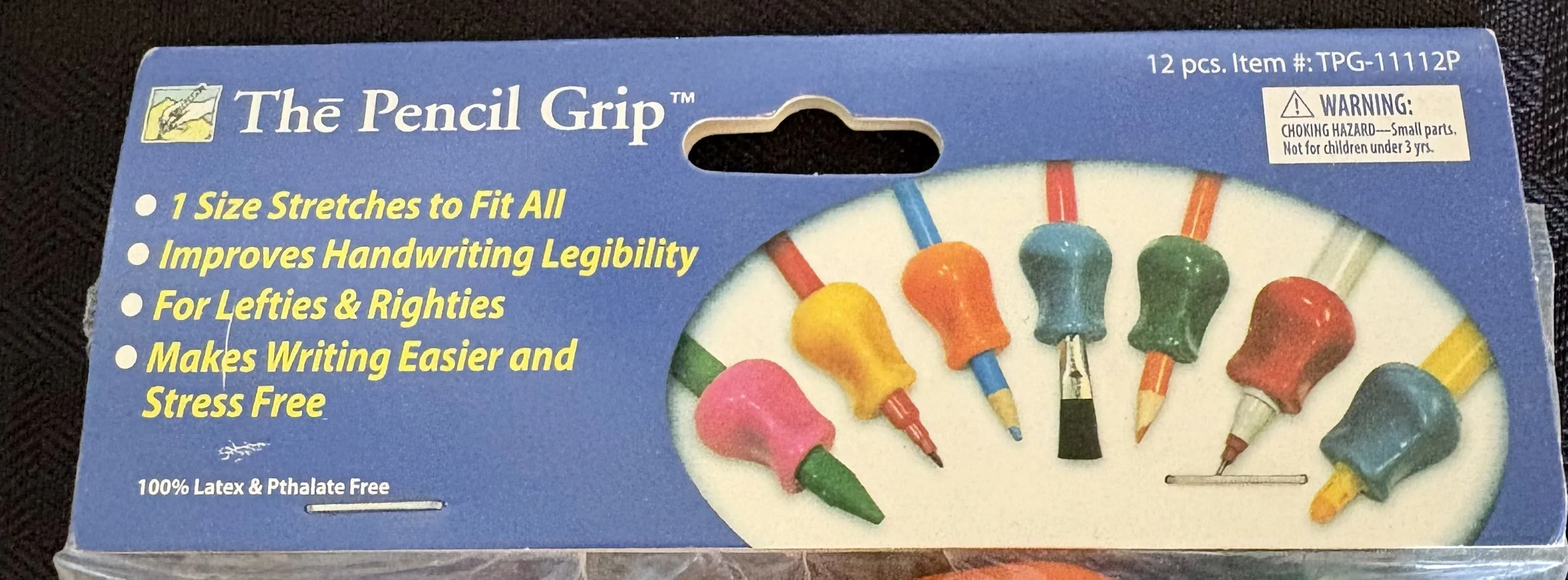
Pencil grip
If the pencil looks awkward or your child’s hand gets tired, a pencil grip can help.
Teacher stores carry them. A few are also in the shop if you cannot find one locally.
The grip is a helper.
Short Practice still matters more

How to form the letters
Watch the demo, then try those letters together.
Writing in kindergarten is short practice, not a full workbook page.
A few letters, done the same way each time, beat a long row of sloppy ones.
What to practice
Follow the same letter order as your Letter Friends, not A to Z.
Spend most of the writing time on lowercase. That is what children see in books.
Weekly routine
Writing once or twice a week is enough.
One new letter that week → write once.
Two letters that week (C/K, S/Z, M/N) → write once or twice you decide
At each sitting:
Write each previously learned letter one time.
Practice the new letter 3-5 times
Stop. Do not fill a whole line.
Keep it short and fun.
Much, Much Later
When writing turns into words
After several vowels and a few consonants are familiar, add simple words to writing time.
Say: “Tell me how to spell man.”
“What letter says /mmm/? What comes next?” “ma… man
Write it together. You model. They follow.Say: “Tell me how to spell go.”
Repeat the rules while you spell the word.
Why can o say its name in go? Because it is a baby word that ends in a vowel, and the vowel can say it’s name”
A simple build-up
Continue writing one letter of each of the abc until you get to the end of the alphabet
add 3–5 words in each session
once you get to the end of the abc transition into just writing words
write 5-10 words, then one short sentence, such as I see a sun, and draw a picture